Friday, June 19, 2015

Pitch Perfect 2: Sequel Doesn't Quite Carry The High Note

Pitch Perfect 2 poster.jpg
Director: Elizabeth Banks
Genre: Musical Comedy
Starring: Anna Kendrick, Rebel Wilson, Elizabeth Banks, Brittany Snow, Hailee Steinfeld, Skylar Astin, Adam Devine
Distributed by: Universal Pictures
Release Date: May 15, 2015
My Rating: 5/10

Yes, the pitch is back. This time, however, it fails to match the tune of its progenitor. In this follow-up to 2012's hit musical comedy, Beca (Kendrick) returns, this time as a senior and de-facto leader of Barden University's all-female a-cappella group, the Barden Bellas. The film opens with President Obama's birthday party he Kennedy Center, where the Bellas deliver a cringe-worthy performance that culminates in Fat Amy (Wilson) hanging upside-down and accidentally ripping her sheer outfit to reveal her genitals. In an attempt to recover from this embarrassing scandal shamelessly dubbed 'muffgate,' the Bellas and regain their reputation as a well-respected, three-time national-championshiop-winning a-cappella troupe, the Bellas take on a great risk by preparing for the World instrumental-less singing competition in Denmark, which no American team has ever won.

Many of the raunchy jokes, unexpected one-liners, and occasional slapstick situations and hi-jinks from the original film return in this one, (with a slightly more R-rated tendency if you ask me) as do the corny a-cappella-related puns. Nevertheless, many appear to simply be recycled, at the expense of a less substantial plot. Kendrick proves to be even more awkward than the confused freshmen we see in the first film, especially around her boss (Keegan-Michael Key) at her new internship at a record label, which slowly begins drawing Beca further away from her commitment to the Bellas. Perhaps this was mean to be a quintessential trait for this character, but Kendrick's constant alternation between delivering her lines with too little and too much emotion eventually becomes frustrating. Even Lily, the ridiculously soft-spoken, eccentric Asian girl does not utter the same creepy one-liners and strange facts about herself with the same tone.

The scenes in which the Bellas exchange witty insults and retorts with other rival a-cappella groups, most notably German powerhouse Das Sound Machine, make you want to roll your eyes and face-palm. If anything, the German stereotypes as embodied by Das Sound Machine's leaders (tall, strong, light-skinned stern and arrogant wax-like figures with noticeable German accents and a disdain for anything American) seem almost too caricatured. And an unsuspecting and very non-masculine cameo by the Green Bay Packers will surely make millions of people cackle, while also probably causing their most ardent supporters to do everything to disassociate themselves from that team name.   I had hopes for Steinfeld's character, an awkwardly enthusiastic freshmen named Emily who becomes the Bella's newest recruit and is nicknamed 'legacy' due to her mother's long tenure as a Bella. However, even she is not given as many lines, and the few comical ones she is granted, she appears to awkwardly rattle off at break-neck speed. Besides, the side-plot involving the Treblemaker's nerdy magician Benji's relentless attempts to display how much he is pining for Emily's love is ridiculous. Much more screen time should have been devoted instead to the relationship between Beca and Jesse (Astin), now the leader of the Trebles who played such an integral role in making Beca realize her mistakes in the first film. Brittany Snow's Chloe, who returns as the third-year super-senior incapable of relinquishing her control over the Bellas, proves even more ditzy and frustratingly shallow this time around, and you can't help but just feel sorry for her.

Even Wilson's character, the filter-less, raunchy, and supremely-proud-of-her-physique Fat Amy's trademark deadpan and uninhibited preparedness to state the obvious before anyone else, does not bring back the same level of hilarity that made fans bend over laughing in the first film. A side-plot involving her on-and-off sexual tension with former Trebles frontman Bumper (Devine) is also a bit disturbing. Of the returning characters, only Elizabeth Banks, who also directs, and John Michael Higgins provide entertainment with their mildly tense exchanges as the a-cappella announcers, John Smith and Gale Abernathy. Banks again finds a way to stay quirky, all while degrading Higgins' character with her witty remarks calling out the absurdly inaccurate, and occasionally sexist, statements that he makes in his own. The only new character that personally made me chuckle a few times is Flo, a Guatemalan exchange student with a Hispanic accent thankfully less hyperbolized than Sofia Vergara's on Modern Family, who is constantly harping on the rudimentary lifestyle in her home country and evincing the probability of her imminent deportation should she do anything remotely wrong.

The soundtrack certainly is better than that of the first film, although the humor appears vigorless and without panache. Clearly, screenwriter Kay Cannon appears to have struggled to find more original jokes for this sequel, and the few moments that do lead you to laugh or even crack a smile are quickly followed by morbidly awkward scenes. Towards the end of the film, once the Bellas finally arrive in Denmark for the International Competition, Beca incorrectly references the celebrated Danish writer of children's fairy tales as "Hayden Christian Andersen," to which Fat Amy responds by citing his lackluster performance in the Star Wars film franchise. That's when you become one step closer to giving up on this film. If you need any more confirmation about how incredibly random and head-shake-inducing this follow-up is, just imagine a Snoop Dogg cameo that involves him rapping classic Christmas tunes in a recording studio. Yeah, it's that absurd. As if the trope of introducing a well-known artist record his own version of an album with classically infantile songs hadn't been used in every other music-related comedy in recent years, this one just chose a rapper who doesn't even have the same star power as he used to have just a few years ago. (And who, due to his Rastafarian conversion, is now known as "Snoop Lion" and is more known for this than for his actual music) The Bella's final performance includes Beyonce's contemporary R&B jam "Run the World (Girls)," and although female power is evident in this performance, it is not in the film as a whole, at least not judging by the glib jumble of lines assembled as part of this insipid script. Aca-astalavista, this singing comedy franchise is over.

Saturday, June 13, 2015

Life Itself: It Truly Is Beauty to Behold

Life Itself doc poster.jpgDirector: Steven James
Genre: Documentary
Starring: Roger Ebert, Chaz Ebert, Marlene Siskel, Errol Morris, Martin Scorsese, Ava DuVernay
Distributed by: Magnolia Pictures
Release Date: July 4, 2014
My Rating: 9/10

Any major cinephile should know who Roger Ebert was, or at least have heard the name. This documentary, directed by Steven James (Hoop Dreams, Stevie) and based on the eponymous memoir written by Ebert, presents an elaborate, in-depth view of the life and career of one of the most renown American film critics of the twentieth century.

The film traces Ebert's humble beginnings growing up as the son of a bookkeeper and electrician in Urbana, Illinois, where he served as a sports writer for the local town paper as a high-schooler at the age of 15. The film then explains how his work as a writer and editor for the Daily Illini at the University of Illinois at Urbana-Champaign led him to enroll in a yearlong master's in English/fellowship program at the University in Cape Town. This, in turn, helped Ebert become a PhD candidate at the University of Chicago and after writing several freelance pieces for the Chicago Daily News, was referred by the paper's editor to the editor of the Chicago Sun-Times, where Ebert was hired as a full-time film critic in 1967 after about a year of working as a feature writer.

The documentary then focuses on the wide range of film genres that Ebert reviewed along with Chicago Tribune film critic Gene Siskel, his relationship with his wife Chaz, the debilitating thyroid cancer diagnosed in 2002 and subsequent fractured hip that led to his death in April 2013, and his active participation in digital promotion through the creation of his blog, personal website, and Twitter profile as outlets to continue publishing his reviews.

The film begins like many other documentaries: with a few simple facts churned out, with no major emotional attachment, about the subject's upbringing, a collection of old photographs and raw footage of Ebert's start. The pictures show a young man (with a round, pudgy face that appears to be an almost exact, fresher replica of his face as an older man) enthusiastically entering the realm of journalism and churning through different topics before settling on his ultimate passion for moving pictures.

However, the biography soon evolves into much more than a simple linear narrative centered on Ebert's career as a film reviewer. Through the eyes of those who knew him best, primarily his wife Chaz, his friend and colleague Gene Siskel's wife Marlene, and great contemporary filmmakers like Martin Scorsese (who serves as executive producer of the documentary) and Errol Morris with whom Ebert also became close, surfaces an intricate analysis of the critic's outlook on life's subjectiveness as portrayed through cinema. Steve James, along with many of these commentators, (especially Chaz) paints a portrait of a man who seemed capable of finding humor even in the most morose and tense situations.

The raw footage of Ebert's heated arguments with Gene Siskel (on their many syndicated film review TV shows) over both the approach and perspective on certain films seem to initially depict these arguments as amusing, then increasingly destructive and even pathetic. One could almost compare the two celebrated critics to a pair of petulant children in a playground quarreling over a playing ball. Siskel's narrow-mindedness, pedantry and ego appeared to have collided head-on time and again with Ebert's open-mindedness. Ebert himself was also not without certain faults, however, as his occasional scathing remarks demonstrated. At one point while preparing a promo for 3 different films, Ebert's filter evaporates as he caustically jokes: "For Gene, speech seems to be a second language." The brief uncomfortable silence that follows as Siskel struggles to formulate a retort comes as no surprise. Ebert clearly also had a bit of an inflated ego, as demonstrated by his belief that winning a Pulitzer Prize qualified him to write high-caliber reviews about anything.

Likewise, Ebert's unabashed joke as a panelist at a film convention that "The main reason I used to come to these things was in the hopes that I would get laid" may have drawn hearty laughs from many attendees, although I'm sure a comment like this equally elicited cringes from many members of the film industry who received this as a rather creepy remark from a not-so-young outsider.

In the end, of course, it is not until Siskel dies in 1999 that Ebert seemed to have really praised his former fellow critic. Per usual, the aphorism "you don't know what you've got till it's gone" has never rung more true. Whether Ebert's change in his description of Siskel post-death appears hypocritical is up for the audience to decide.

What is perhaps greatest about this film is its emphasis on Ebert's unbridled optimism, resilience and sense of humor despite the cancer that left him looking like an emaciated zombie with a horrifyingly protruding jaw and a broken hipbone. Yes, one could easily compare his case to that of Stephen Hawking because of this. Nevertheless, what makes Ebert's story different is his anthology of work and expertise in a creative field that appealed to human emotions, unlike physical laws of nature such as quantum mechanics. (Not to demean Hawking's groundbreaking work, of course, just simply stating the inherent difference between art and science)

Chaz Ebert provides a very authentic image of her late husband as a man who found catharsis not simply in films but in the everyday moments. Likewise, Marlene Siskel's account of Ebert and her own late husband's tug-of-war relationship, though second-hand, shows how much the two critics truly learned from each other, and how genuinely Ebert respected Gene Siskel despite their diverging viewpoints and how sorely Ebert missed him after his death due to a brain tumor.

Reviewing a documentary is always difficult, partly because documentary films generally present facts and footage that are indisputable and not understated, glorified, or overdramatized by unrealistic plot additions, distortions, or one-dimensional perspectives like the ones Hollywood biopics sometimes tend to adopt. However, Life Itself is an informative, entertaining, heart-wrenching, and multi-faceted look into the life, career, and mindset of a man whose strove to derive happiness and meaning from so many of his endeavors. I don't know if they ever met, but I'm sure Roger Ebert and Roberto Benigni would wholeheartedly agree: La vita e bella. Life truly is beautiful.   


Sunday, March 1, 2015

Oscar Editon Part 2: Whiplash Comes in with a Crack and a Bang

Director: Damien Chazelle
Written by: Damien Chazelle
Genre: Drama
Starring: Miles Teller, J.K. Simmons, Paul Reiser
Distributed by: Sony Pictures Classics
Release Date: October 10, 2014
My Rating: 9/10

I haven't seen a film like this in a very long time. Damien Chazelle, a 30-year-old French-American Harvard grad, writes and directs this emotionally raw and intense drama about a young drummer at a prestigious music school. The film is loosely based on Chazelle's own experiences playing in the Princeton High School Studio Band.

Whiplash tells the story of Andrew Neiman, a 19-year-old first-year student at the fictional Shaffer Music Conservatory in New York City. There, he joins the jazz band/ensemble as a drummer and begins his instruction under the merciless conductor Terence Fletcher, who uses both physically and emotionally abusive intimidation tactics to push his students to their full potential.

Determined to one day become as renown a drummer as one of his great idols, jazz legend Buddy Rich, Andrew endures mental, emotional, and physical pain to reach his goal, suffering through Fletcher's humiliating teaching methods along the way.

For any great jazz fans or music fans in general, let one thing be clear: this film is not merely about jazz music. The music is great, and the various band instruments' sounds are meshed together beautifully, as evidenced by the Oscar win for best Sound Mixing. However, the focus of the story seems to be much more centered on the student-teacher relationship, and how it gradually develops into one that becomes not only unprofessional and inappropriate but disturbing.

JK Simmons delivers a frightening, Oscar-winning performance as the villainous and almost psychopathic band conductor Fletcher. Simmons's ability to embody a character who does not appear to have a single good bone in his body is astounding, not only during his loud scenes but also throughout the scenes in which he appears more calm and composed. Simmons' voice, facial expressions, and movements all help bring to life this ruthless character who, much like Malcolm X, appears willing to achieve his goals by any means necessary.

Personally, I couldn't help but not only feel horror and hatred toward this character, but also a sort of frustration at the flaws in the logic and arguments behind his teaching style. For example, he states that if you don't push a musician to their limits, you could be depriving the world of the next big music star. First of all, that young musician may not have the potential to be the next big star, and even if he/she does, insulting and humiliating that person may eventually cause that person to feel LESS motivated to improve, depending on their personality. I understand what Fletcher is trying to say when he says "There are no two more harmful words in the English language than 'good job,'" but that is a stupid assertion nonetheless. Why? Because constructive criticism and positive reinforcement exist.

I apologize for this long and blatant tangent, I just needed to vent some of my frustrations about this character who has clearly never heard of the Pygmalion Effect. It's safe to say that any conductor who throws a chair at a student and proceeds to slap him multiple times for making a mistake like getting the tempo of a tune wrong requires some serious counseling. Not to mention a teacher who is also constantly hurling homophobic, racist, and otherwise insensitive personal insults at students in the misguided belief that there will be no repercussions.

Despite his lack of any major award nominations, Miles Teller also demonstrates his extraordinary talent as an actor in this film. It appears difficult to not like his character, not only for his initial innocence, but for his courage and perseverance under this maniacal conductor's teaching style. The wide range of emotions that Teller conveys through his voice and facial expressions is impressive.

The occasional fast-paced scenes or montages, accompanied by the vibrant jazz music that provides the backdrop for the story, all help to set the dark and stressful tone of the film. The dim lighting/contrast and close-ups of Miles Tellers and the other drummers' sweating and contorted faces, as well as their bloody hands clutching the drumsticks further help to emphasize how these young musicians, and especially Teller's character, are literally being pushed to their physical limits. (Yep, you read that correctly, there is a surprising amount of blood in this film for a story about a drummer)

My one criticism of the film is that there is one scene in particular (or two successive short and quick scenes) that does not seem very plausible or realistic due to what has happened previously in the story. I will not divulge what this scene for fear of spoiler alerts, but I will only say that it represents a turning point in the film which I think those who have seen the film will immediately recognize. I will only say that it involves an incident from which the character emerges less physically harmed than one would expect. This scene also culminates in a brief violent altercation, which again seemed too forced and overly dramatic.

Nevertheless, one thing is for certain: Whiplash delivers a visceral blow that will leave you shocked beyond belief. But don't worry: thankfully, the film ends on a good note (pun intended), even if the final outcome is not revealed until the last few seconds. A glimmer of hope remains at the end of this dark story and helps show how tenacity can in fact lead to satisfying results. In the end, I think that this is the main point that Whiplash is trying to make, by telling this simple, not convoluted, yet incredibly powerful and poignant story. Any musician, athlete, or any type of young apprentice who has ever had a teacher like Terence Fletcher will surely be able to relate to this young drummer on more than just one level.


Saturday, February 28, 2015

Special Oscar Edition: Birdman (or The Unexpected Virtue of Ignorance) Soars High and Swoops

Director: Alejandro Gonzalez Inarritu. 
Genre: dark comedy/dramedy
Starring: Michael Keaton, Emma Stone, Edward Norton, Zach Galifianakis, Amy Ryan
Distributed by: Fox Searchlight Pictures
Release Date: October 17, 2014
My Rating: 9.5/10

Since it just won the Academy Award for Best Picture (and Best Director), and was without a doubt my favorite movie out of all the films nominated for Best Picture that I've had the opportunity to see, I figured I would write my own personal take on this brilliant film.

The film tells the story of Riggan Thomson (Keaton), a washed-up screen actor who was formerly known for playing the iconic superhero Birdman three times many years prior. Now, in an attempt to revamp his career and hopefully garner more respect and prestige as an actor, Thomson decides to mount a Broadway adaptation of Raymond Carver's short story "What We Talk About When We Talk about Love."

In the process of directing and acting in this stage production, Thomson finds himself wrestling with multiple people, problems, and inner demons: his daughter and personal assistant (Stone) who has recently been released from rehab, his ex-wife (Ryan), his girlfriend, a famous and narcissistic Broadway Actor (Norton) who joins the cast of his play after his lead actor is hit by a light, and very skeptical critics (and one female critic in particular whom he meets in person and who mocks him). Thomson's greatest battle throughout the story, however, appears to be with himself, and more specifically with his own ego.

Birdman is an exceptional film, not only because of the story itself, but because of the camerawork and overall cinematography (which won cinematographer Emmanuel Lubezki the Oscar this year). The incredibly long, continuous takes that seem to follow the actors in one sweeping motion wherever they go (backstage, on the stage, on the streets of New York City, etc.) almost make the film itself seem as if it was shot in a single, equally continuous take. This type of camerawork could be dizzying to some, but it certainly adds to the story by making the audience feel as if we are in the film and part of the story, right beside the characters. The lighting (or lack thereof) in certain scenes is also very well chosen, and helps to emphasize certain lighter or darker moments in the story. There are also a number of very close shots (close-ups), especially of Keaton, that reveal every inch of the actors' faces in a way that accentuates their expressions and emotions that is very visceral.  

As for the story itself, the script is beautifully written, (as evidenced by its Oscar win for Best Original Screenplay) and it intertwines comedy and drama in a brilliant way. Michael Keaton may not have won the Oscar for Best Actor, but he certainly delivers an incredible performance as a former blockbuster movie star who is simply attempting to, as his own daughter so eloquently puts it, "feel relevant again," by managing the stage adaptation of this Raymond Carver story. (Carver is revealed to be one of Thomson's personal heroes, after the two met at the end of a play the latter did in his youth. Carver complimented Thomson on his performance and thus Thomson realized in that moment that he wanted to become an actor) Although we only get glimpses here and there of the actual play based on Carver's short story, it seems that the character that Thomson portrays in it is suffering from a personal crisis very similar to his own, ironically enough. 

Edward Norton is amazing as Mike Shiner, the supposedly renown, sharp-tongued and egotistical Broadway actor who joins Thomson's production and who, due to his personality, creates problems for Thomson and the rest of the cast and crew. Norton plays a drama queen in such a funny way that I found it difficult not to laugh or even smile at the tone in which he delivered some of his lines, even if his character is despicable. My personal favorite: "Popularity is the slutty little cousin of prestige, my friend." Emma Stone has one scene in which she displays remarkable talent as an actress (when you see the film you'll realize which one I'm talking about), although besides this scene her character appears to be vastly underdeveloped and thus makes me question why she was nominated for an Oscar, even if she didn't win. Personally, Amy Ryan delivered a much more noteworthy performance as Keaton's ex-wife, even if she got less screen time than Stone. Her character makes her ex-husband realize certain things about himself, his career, and his relationship with her and the other people in his life. 

Although it may also sound ridiculous at first, the voice-over of the Birdman character speaking to Thomson, egging him on to show the public what he's capable of, works in the sense that it very concretely demonstrates the inner battle that this protagonist is facing. It almost reminded me of other well-known fictional characters who struggle with this type of dual-personality/double-identity crisis. (Jekyll and Hyde, Smeagol and Gollum, etc.)  However, one of the few aspects of the movie that I did not like, and that seemed too contrived and overdone, were the scenes in which Thomson is shown levitating, flying or doing any sort of fantastical, superhero-like action. 

Birdman certainly tells a compelling story that probably reflects the career of many real, contemporary actors who were formerly known for playing iconic, superhuman characters and are now attempting to change the public's opinion of them, many years later in their career, by tackling entirely different types of roles that are "more human." The fact that Michael Keaton, who was famously known for playing Batman in the 1980s, was cast as the lead actor in this film, is no coincidence. If you're as big a cinephile as I am, you will appreciate almost every minute of this film. I may be biased because the director, Inarritu, is Mexican, but reviews and award shows say enough: Birdman soars high and swoops in to deliver a very entertaining story. Plus, let's face it, watching Michael Keaton parade through the streets of Time Square wearing nothing but his underwear (which Neil Patrick Harris so shamelessly recreated at the Oscars) is rather hilarious. Watching Keaton and Norton wrestling on the ground while also wearing very few clothes is even more hysterical. Or perhaps a little sad and pathetic to some. But mainly hilarious.            

Wednesday, May 21, 2014

Heaven Is For Real

File:Heavenisforrealtheaterposter.jpgDirector: Randall Wallace
Genre: Family drama
Starring: Greg Kinnear, Kelly Reilly, Thomas Haden Church
Distributed by: TriStar Pictures
Release Date: April 16, 2014
My Rating: 7.5/10

This was a very uplifting film that I had the pleasure to see on Mother's day with my mother. It is based on the bestselling 2010 novel of the same name by Pastor Todd Burpo and tells the amazing true story of his son Colton, a 4-year-old boy from small-town Nebraska who recounted his visit to heaven to his father after a near-death experience.
After being rushed to the local hospital because of what they initially believe is appendicitis, Todd (Kinnear) and his wife Sonia Burpo (Reilly) begin to realize their son's medical condition is actually much more severe and fear he may not live. However, a miracle appears to save little Colton and the boy lives to tell the tale of how he went to heaven during his brief stay in the operation room during his surgery. Colton claims to have met Jesus, as well as a number of people from his family who passed away before he was born, including his great-grandfather and his sister who died during a miscarriage. Despite being very religious, Todd and everyone else in the small local community in Nebraska find all of his son's claims difficult to believe at first, but gradually Todd realizes that there is no reason for him not to believe his own son. With support from friends including a bank manager (Church) and other members of his parish, Todd Burpo strives to find meaning behind his son's journey to heaven.

This was a very refreshing story, with a very simple yet at the same time extraordinary plot. Unlike other religious films that capture many cliches about faith (or lack thereof), particularly the Christian faith like this one, I believe that this movie was so much more heartfelt-and this may sound crazy-because it was mostly told from the perspective of a very young and innocent child. Newcomer Connor Corum, who plays Colton, delivers an incredible performance as an adorable little boy who is determined to share his unique paranormal experiences with the world. I am always impressed by young child actors like this one who come along and bring so much heart to a tale that we can all relate to. (well, maybe the part of the story involving a child surviving a fatal disease or accident and not the more fantastical element of it anyway)

Tuesday, May 6, 2014

The Grand Budapest Hotel

File:The Grand Budapest Hotel Poster.jpgDirector: Wes Anderson
Genre: black comedy
Starring: Ralph Fiennes, Jude Law, F. Murray Abraham, Bill Murray, Edward Norton, Adrien Brody, Jason Schwartzman, Tilda Swinton, Tony Revolori
Distributed by: Fox Searchlight Pictures
Release Date: March 28, 2014
My Rating: 8/10

This is perhaps one of the strangest films I've seen in years. This dark comedy follows the story of a concierge named Gustave H. (Fiennes) who works at a luxurious hotel in Europe in the fictional Republic of Zubrowka, high up in the mountains. After he is framed for the murder of an elderly woman who stays at the hotel, Madame D (Swinton) Monsieur Gustave H. embarks on a wild journey with his loyal lobby boy Zero Moustafa (Revolori) to prove his innocence. The film features a series of crazy scenes, including a daring prison escape, a stolen painting, cable cars and a sled/ski pursuit, as well as numerous disguises.

This is the first film I have seen by Mr. Anderson, and although I was not convinced when the movie began, I left the theater rather satisfied. I have only seen a handful of dark comedies in my time but this is certainly one of my favorites. The story is simple, but the events that occur are a great thrill ride. Watching a renown dramatic actor like Ralph Fiennes (The Reader, Voldemort from the Harry Potter movies) play the lead role in this film that blends elements of both the serious and the absurd was refreshing, and he plays the part beautifully, as does newcomer Tony Revolori who plays his sidekick Zero. I was surprised by how violent and bloody some of the scenes were, nonetheless.

This is not a masterpiece of modern cinema in any way, but it is certainly a film worth spending time viewing if you are even remotely a fan of black comedies. If this is not the type of humor or intrigue you prefer, then I would strongly advise against it.

Saturday, April 19, 2014

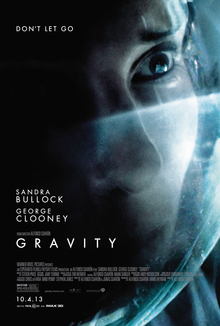
Gravity

File:Gravity Poster.jpgDirector: Alfonso Cuaron
Genre: Drama/Thriller
Starring: Sandra Bullock, George Clooney
Distributed by: Warner Bros. Pictures
Release Date: October 4, 2013
My Rating: 9/10

I know that this film is a few months old but since it snagged the highest number of awards at the Oscars this year (7), I decided I would offer my take on it. I finally got around to seeing it the other day, so here it goes for all those of you who haven't had the pleasure of viewing it, or who have and just wanna know what I thought.

This is undoubtedly one of my favorite drama films in recent years. It tells the story of medical engineer Dr. Ryan Stone (Bullock) on her first space shuttle mission on board the Explorer. Joining her is veteran astronaut and Lieutenant Matt Kowalski (Clooney), the leader of the journey. The mission control base in Houston warns the two astronauts that a Russian missile strike has hit a dead satellite, which has caused a chain reaction forming a cloud of debris. Mid-orbit, the Explorer begins to be gradually destroyed by the debris, causing Dr. Stone to separate from the shuttle and start hurtling into space. She and Kowalski momentarily recover, and converse as they travel through the vast unknown. Stone reveals that she once had a daughter who died in a tragic accident when she was only four years old.
The pair then reach the International Space Station (ISS) located several hundred miles away in orbit, but eventually the debris returns and as Stone's leg gets caught in her parachutes' cords, and she grabs onto Kowalski's suit. Despite her protests, Kowalski detaches himself from the tether to prevent her from drifting away with him. Stone is pulled back toward the ISS while Kowalski tumbles away. After several failed attempts at establishing communication with Kowalski, Stone realizes that she is the sole survivor. Stone battles several obstacles alone in the capsule, including loss of oxygen and a large fire.

The film is very short, just barely hitting the 90-minute mark for running time. However, it feels much longer due to certain sequences of non-stop heart-racing action. The special effects, dialogue, and score/soundtrack all spectacularly contribute to demonstrating the intense peril that the characters face, especially Dr. Stone in the second half of the film. This is precisely the type of movie that reminded me why Sandra Bullock is one of my favorite actresses, who is capable of portraying both wacky comic characters (Miss Congeniality, The Heat) and heart-wrenching protagonists like the one she completely immerses herself in in Gravity. The increasing terror she experiences throughout the film is practically palpable, particularly toward the end. The theme of coping with the loss of a loved one is also briefly yet beautifully touched upon. Golden Globe winner and Academy-Award-winning Mexican director Alfonso Cuaron (Y Tu Mama Tambien, Harry Potter & The Prisoner of Azkaban, Children of Men) brings to the screen an incredible story of fear, courage, and survival.
The story gave me quite a bit of hope in the end, despite keeping me paralyzed with fear for the majority of it. As I recently felt trapped and “paralyzed” for a brief moment, perhaps the most trapped and anxious I’ve ever felt in my life, this film left me feeling significantly more optimistic, as I’m sure it can for many others who have ever felt “stuck in quicksand” so to speak.